Fire-retardant-treated wood (FRTW) plays an increasingly important role in modern construction. It meets strict fire-safety requirements, supports sustainable building goals and allows designers to incorporate the warmth and versatility of wood into projects where fire performance is critical.
But specifying FRTW correctly can be complicated. Codes reference multiple standards, and there are different products for interior and exterior use.
This article is designed to help specifiers make informed decisions, ensuring the proper selection and use of FRTW.
What is Fire-Retardant-Treated Wood?
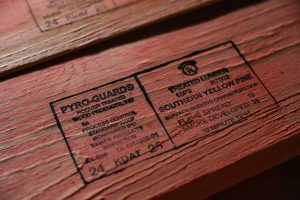
As defined by the International Building Code (IBC), Fire-retardant-treated wood is any wood product that, when impregnated with chemicals by a pressure process or other means during manufacture, shall have, when tested in accordance with ASTM E84 or UL 723, a listed flame spread index of 25 or less. The ASTM E84 or UL 723 test shall be continued for an additional 20-minute period and the flame front shall not progress more than 10.5 feet (3200mm) beyond the centerline of the burners at any time during the test.
Surface coatings, paints or field-applied treatments do not qualify as FRTW.
There are two main types of FRTW:
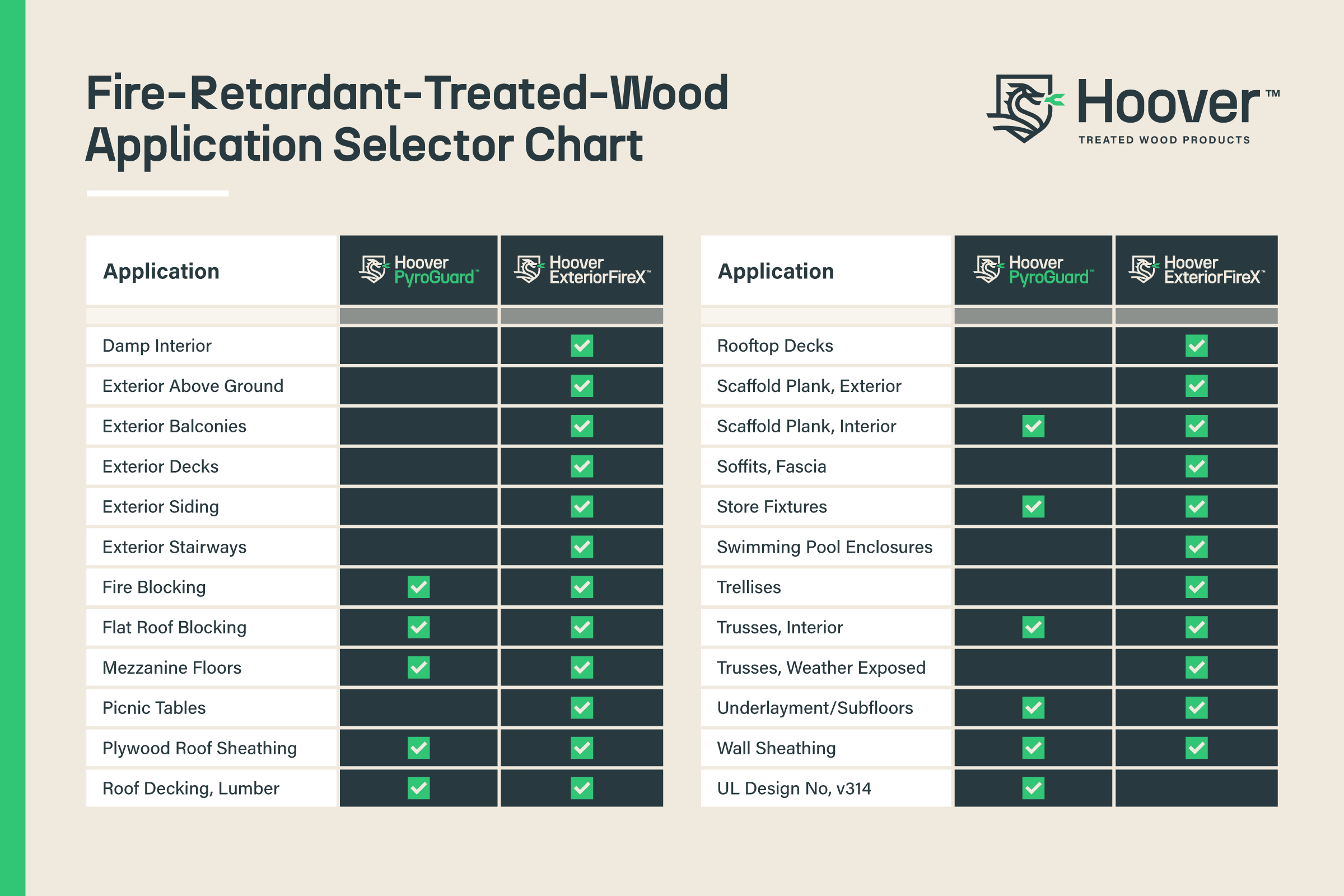
● Interior FRTW (Hoover PyroGuard™) – Used for weather-protected applications
● Exterior FRTW (Hoover ExteriorFireX™) – Used for weather-exposed applications
Both interior and exterior FRTW can be used in many applications where noncombustible materials are required by building and fire codes. Understanding the correct application is essential in the specifying process.
Specifying to Meet Code Requirements
Specifying FRTW focuses on the treatment, handling and fabrication processes. Each step has detailed requirements, all of which can be found in our FRTW Design & Construction Guide (page 22).
Need additional guidance for specifying FRTW? Connect directly with one of our experts by calling 1-800-TEC-WOOD Monday through Friday, 8 a.m to 5 p.m. ET.