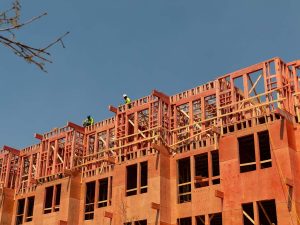
At Hoover Treated Wood Products, we understand that building safe, durable structures requires materials that meet the highest standards. Since 1955, we’ve stood behind our commitment to Build By The Code. Live By The Code.
Our Fire-Retardant-Treated Wood (FRTW) products complete a proprietary pressure-treatment process that enhances the natural properties of wood. It ensures maximum performance without sacrificing our commitment to sustainability.
Step #1: Receiving Raw Materials
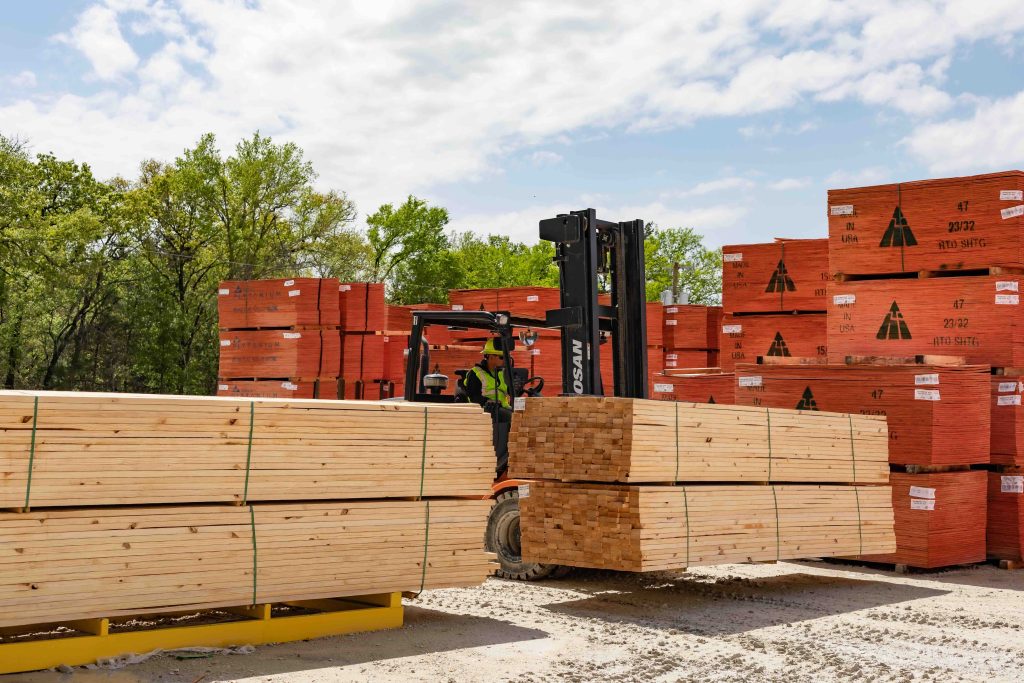
Hoover operates a nationwide network of treating plants, strategically located in close proximity to major lumber and plywood manufacturers.
This not only helps streamline our operations; it cuts down on transportation costs and carbon emissions, reinforcing our commitment to both operational and environmental stewardship.
Careful Preparation
We strive to eliminate waste even before the process begins. Any material requiring custom final dimensions is processed first on our advanced Precision End Trim (PET) saw. Treating pre-cut dimensions ensures only usable wood gets treated to maximize chemical usage, reduce scrap, and save valuable time on the job site.
Step #2: Precise Pressure Treatment
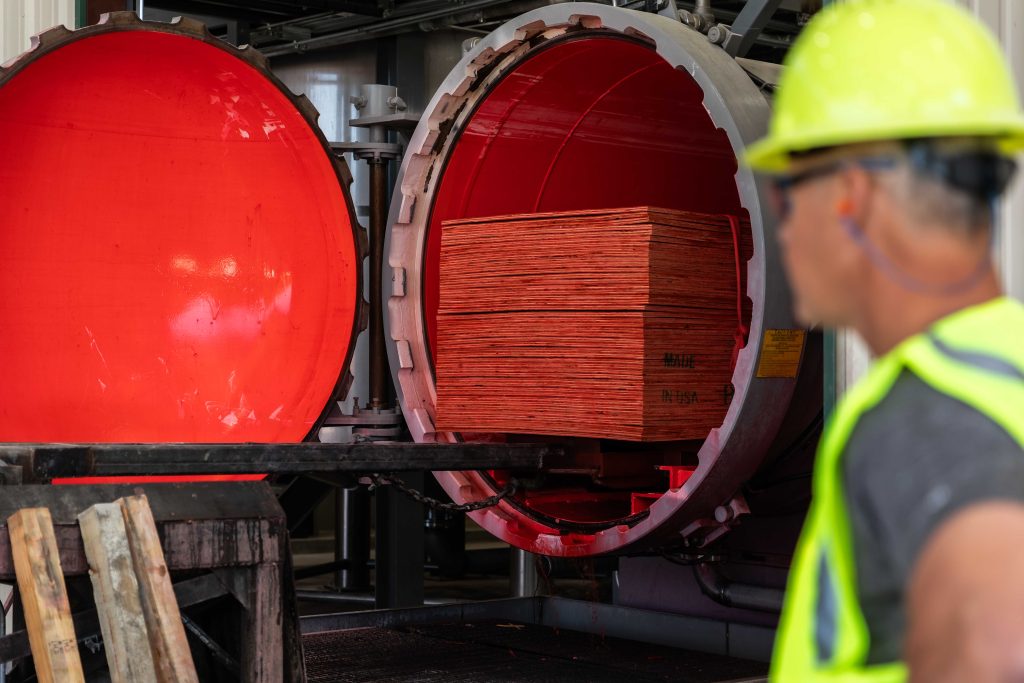
The core of our process lies in the pressure treatment phase. We use a batch treating system, where similar product types are treated together. The exact volume of wood in every batch or “charge” is precisely calculated, allowing us to determine the minimum necessary quantity of our preservative or fire-retardant formulation. This prevents chemical waste while guaranteeing that the final product achieves industry and Hoover standards.
Ensuring Sustainability and Avoiding Hazards
Each load is tightly secured to ensure consistent exposure during treatment. The treatment process begins with a vacuum that draws air from the pores of the lumber, allowing the chemical to fill the void, with roughly 70% of absorption occurring at this stage, before hydraulic pressure is applied to complete the cycle. This forces the proprietary chemical deep into the cellular structure of the wood. Any excess chemicals are captured through our reclaim process and recycled for future batches. This closed-loop system is vital for environmental responsibility and operational sustainability.
Step #3: Consistent Kiln Drying for Stability and Code Compliance
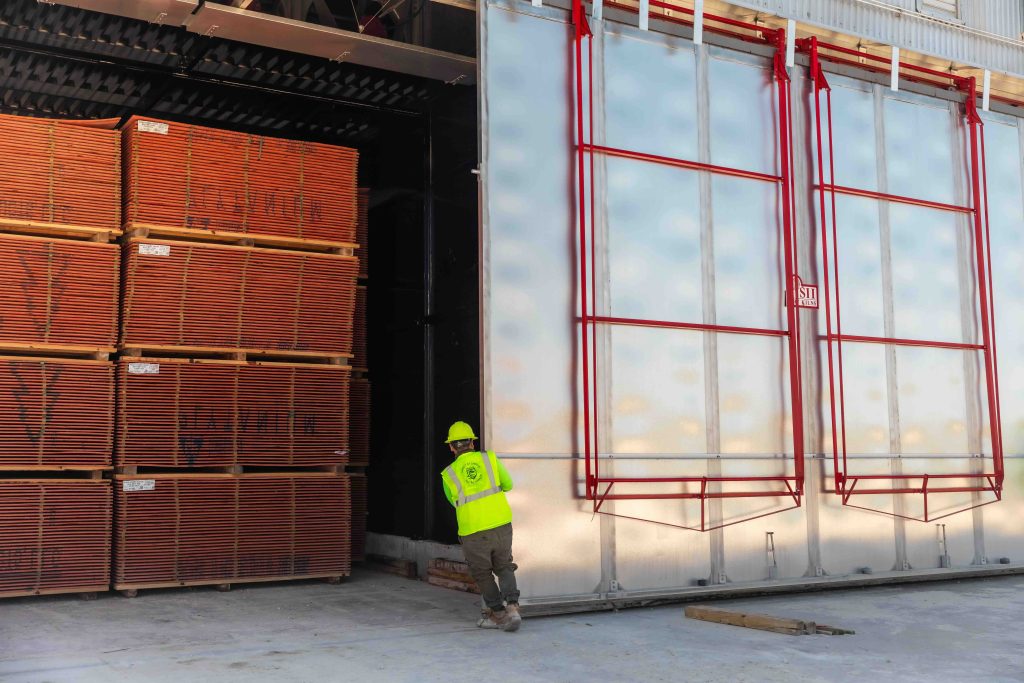
Once removed from the pressure cylinder, drying sticks are placed between the layers of treated wood to promote proper air flow – an essential part of kiln-drying process.
The wood is then moved into our Direct Fire Kilns. This technology transfers heat with extreme efficiency and minimal energy loss. This method ensures swift, consistent, and controlled drying, a critical factor for two reasons:
- Dimensional Stability: It stabilizes the wood, bringing it to the moisture content required by building codes and minimizing the potential for warping or shrinking.
- Performance Activation: It finalizes the fire-retardant chemistry within the wood fiber, optimizing its protective performance.
Step #4: Verification, Certification, and Delivery
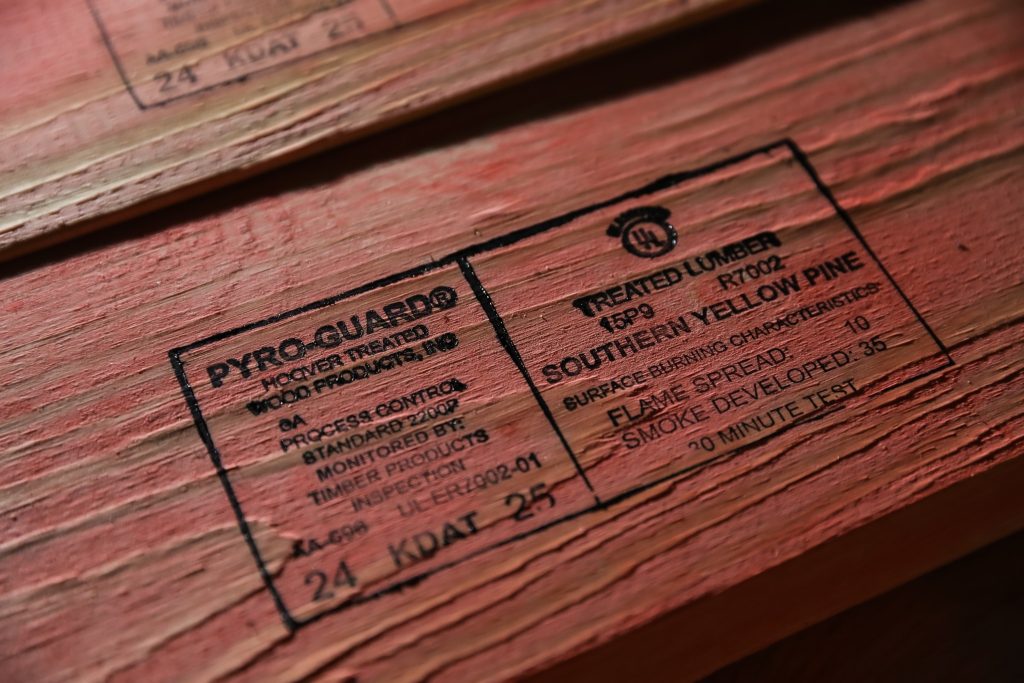
Once the treated wood has achieved the target moisture content, it moves from the drying area to final processing.
Independent Oversight
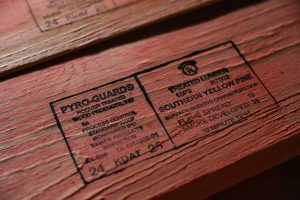
Every piece of our pressure-treated wood is subject to quality control and third-party validation, with independent inspections conducted on a monthly basis. Renowned inspection agencies, including Underwriters Laboratories (UL) and Timber Products Inspection, audit our processes and products continually. Only after confirmation that we’ve met strict code-mandated standards are official third-party labels applied. We ensure these stamps are visible in multiple locations for easy job site recognition and inspector confidence.
Preparation for Customer Delivery
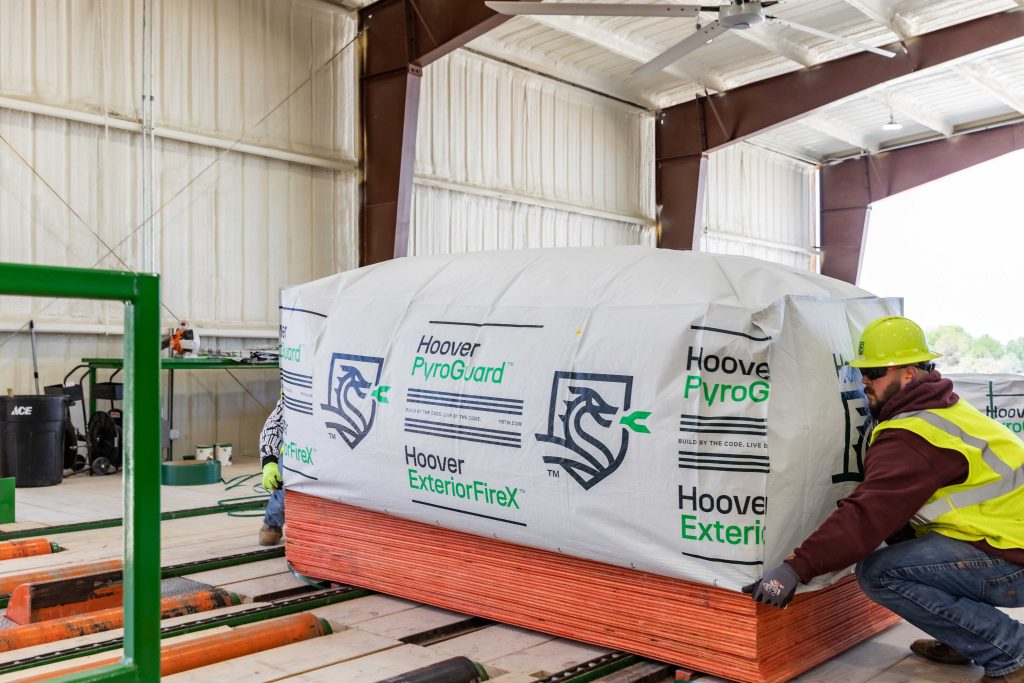
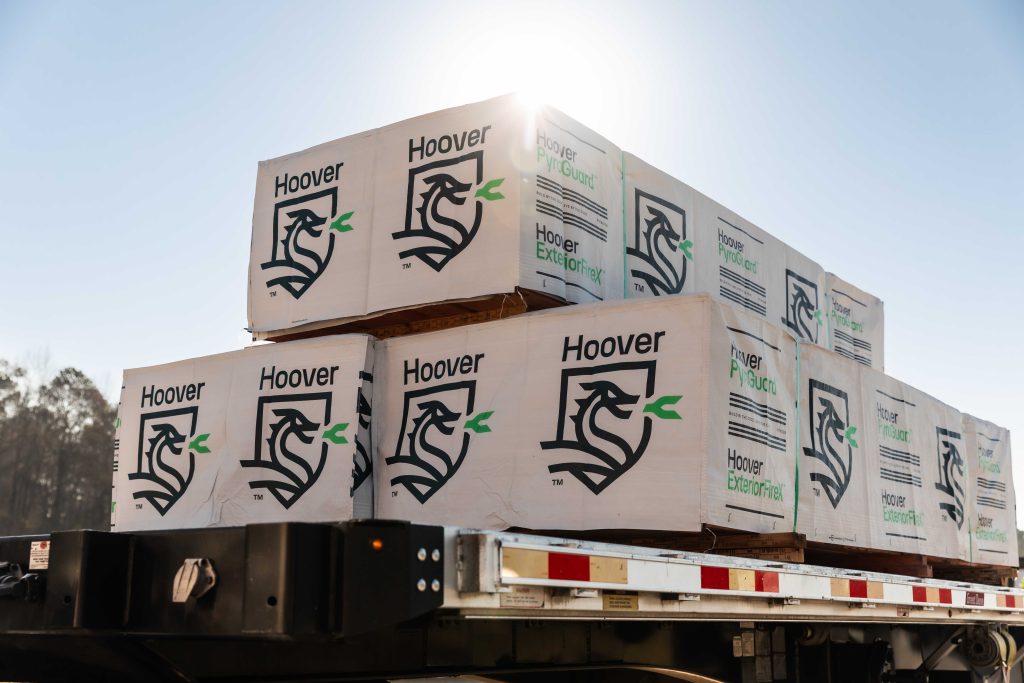
To complete the process, each finished bundle of certified treated wood is tightly secured, neatly stacked, and wrapped in a protective covering, preparing it for delivery directly to your project.
Building on Trust
When you choose Hoover Fire-Retardant-Treated Wood (FRTW) products, you are selecting a product that has been meticulously prepared, chemically treated without waste, kiln-dried for stability and optimal performance, and independently verified to meet the most stringent construction codes.
Contact our technical sales team today to discuss our treated wood products and secure the confidence that comes with building by the code.