News

The latest from the FRTW leader

Top news articles

Stay up-to-date on Hoover product innovation, code updates and other industry happenings.

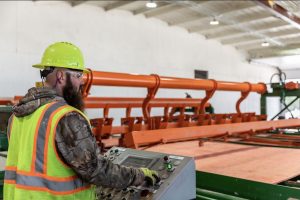
A Hoover Treated Wood Products employee in a high-visibility vest and hard hat operates a control panel at the lumber stacker on the production floor.

How Hoover’s Fire-Retardant-Treated Wood Treatment Process Works

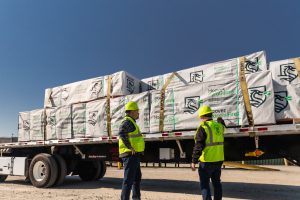
At Hoover Treated Wood Products, we understand that building safe, durable structures requires materials that meet the highest standards. Since 1955, we’ve stood behind our commitment to Build By The Code. Live By The Code.  Our  Fire-Retardant-Treated Wood (FRTW) products complete a proprietary pressure-treatment process that enhances the natural properties of wood. It ensures maximum performance without sacrificing our commitment to sustainability.   Step #1: Receiving

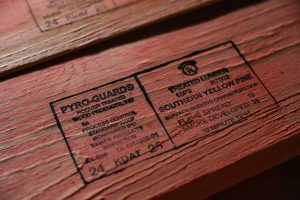
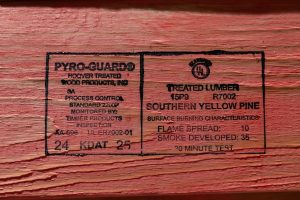
Close-up of Hoover’s PyroGuard Fire-Retardant-Treated Wood showing the product stamp on Southern Yellow Pine lumber, including flame spread and smoke developed ratings.

What is Fire-Retardant-Treated Wood (FRTW)? Benefits, Codes, and Applications

Building and fire safety codes continue to evolve across commercial, multifamily, and residential construction. Fire-Retardant-Treated Wood (FRTW) plays a major role in meeting code and improving building performance. Understanding what FRTW is, how it works, and when it is required helps builders, architects, and code officials choose the right solution for each project.  What

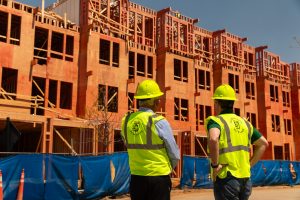
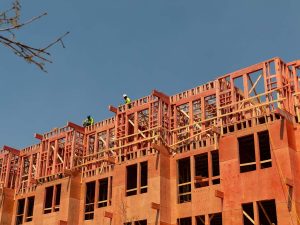
Two Hoover technical experts wearing safety vests and hard hats inspect a multi-story building framed with fire-retardant-treated wood

Meeting Building Codes with Fire-Retardant Treated Wood

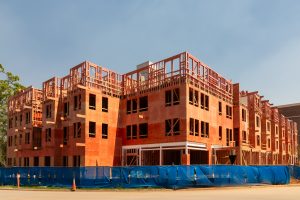
A deep dive into how treated wood products help architects and contractors stay compliant with fire safety standards. As fire safety codes evolve, architects and contractors face growing pressure to specify and supply building materials that are both high performing and code compliant. Fire-retardant-treated wood

Building with Wood: A Sustainable Choice for Construction

Across the country, the conversation around sustainability in construction is shifting. As communities and industries look for greener alternatives, wood stands out — not just for its natural beauty and durability, but for its environmental benefits. Compared to steel and concrete, wood has a significantly

5 Best Practices for FRTW Code Enforcement & Compliance

Building code officials carry significant responsibility, ensuring the safety of building occupants while balancing the interests of developers, architects, and others looking to advance construction projects and the investments they represent. They must navigate evolving materials, construction methods and design innovations while enforcing ever-changing codes.

Hoover Treated Wood Products' experts, Dr. Dave Bueche and Chris Athari, discussing fire-retardant-treated wood (FRTW) solutions for safer structures, with Hoover branding in the background.

1-800-TEC-WOOD: Real-Time Help for FRTW Questions

When architects, contractors, lumber dealers and wholesalers, and building officials need immediate answers to their questions about fire-retardant-treated wood (FRTW), Hoover Treated Wood Products offers a free and invaluable resource: 1-800-TEC-WOOD.   This dedicated helpline provides real-time assistance, ensuring professionals get expert guidance on FRTW specifications,