News

Demystifying Fire-Retardant-Treated Wood Specifications

Writing a strong, generic specification for Fire-Retardant-Treated Wood helps ensure code-compliant FRTW will be installed, competition will be encouraged, and ultimately performance and value for the owner will be delivered. This article, which appeared in the December 2021 issue of The Construction Specifier, contains a strong, generic model specification in standard CSI format for Fire-Retardant-Treated Wood. The article helps specifiers:

  • Identify the critical code requirements for FRTW; and
  • Use those requirements to write their own strong generic specification for FRTW.
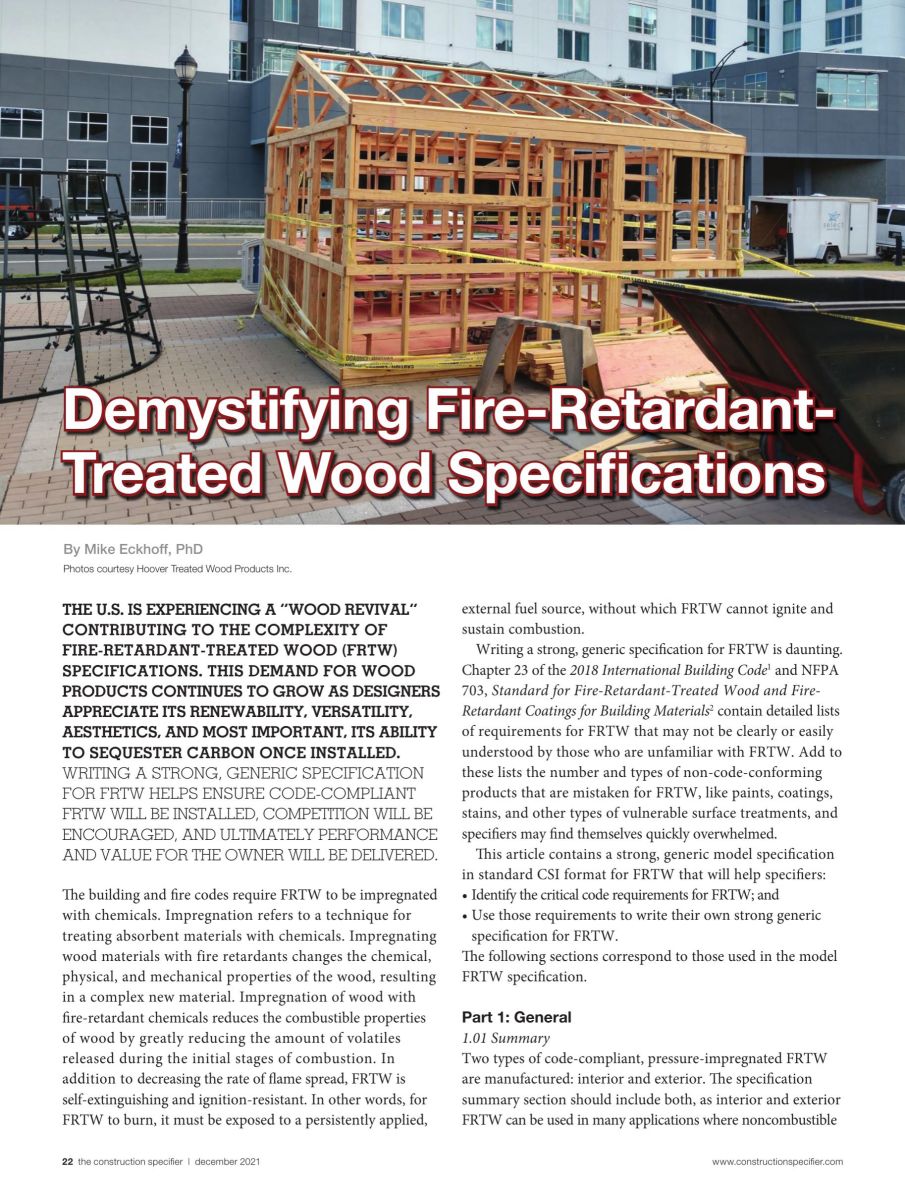
LINK: https://www.constructionspecifier.com/publications/de/202112/index.html
(The article starts on Page 22.)
Related Posts

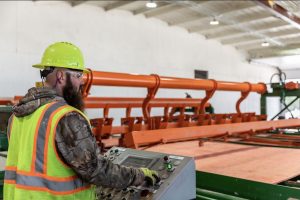
A Hoover Treated Wood Products employee in a high-visibility vest and hard hat operates a control panel at the lumber stacker on the production floor.

How Hoover’s Fire-Retardant-Treated Wood Treatment Process Works

At Hoover Treated Wood Products, we understand that building safe, durable structures requires materials that meet the highest standards. Since 1955, we’ve stood behind our commitment to Build By The Code. Live By The Code.  Our  Fire-Retardant-Treated Wood (FRTW) products complete a proprietary pressure-treatment process that enhances the natural properties of wood. It ensures

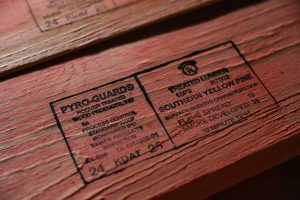
Close-up of Hoover’s PyroGuard Fire-Retardant-Treated Wood showing the product stamp on Southern Yellow Pine lumber, including flame spread and smoke developed ratings.

What is Fire-Retardant-Treated Wood (FRTW)? Benefits, Codes, and Applications

Building and fire safety codes continue to evolve across commercial, multifamily, and residential construction. Fire-Retardant-Treated Wood (FRTW) plays a major role in meeting code and improving building performance. Understanding what FRTW is, how it works, and when it is required helps builders, architects, and