Results

Category: Fire-Retardant-Treated Wood

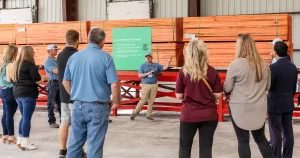
Hoover employee providing fire-retardant-treated wood education to customers at a treatment facility.

What to Look for in Fire-Retardant-Treated Wood | Hoover

What to Look for in Fire-Retardant-Treated Wood: Performance, Engineering and Code Compliance Fire-Retardant-Treated Wood Is More Than a Treatment — It Is an Engineered Building Technology Fire-retardant-treated wood (FRTW) is often described as wood that has been chemically treated to reduce flame spread. While technically true, that definition is incomplete

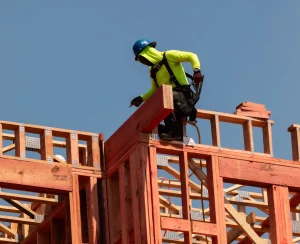
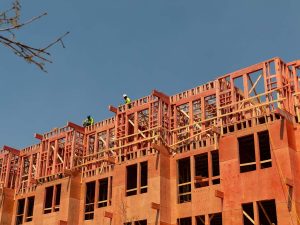
A construction site with workers installing and cutting fire-retardant-treated wood for a building.

Best Practices for Cutting, Drilling, and Fastening FRTW

Fire-Retardant-Treated Wood (FRTW) is a vital safety tool for contractors, code officials, architects and other building professionals. Getting the most out of the materials requires understanding how to cut, drill, and fasten the material correctly to maintain performance and meet code requirements. So what are some of the common questions

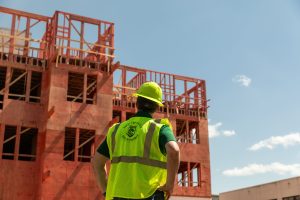
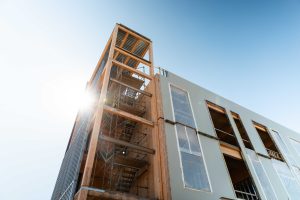
Hoover Treated Wood Products representative wearing a safety vest and hard hat standing in front of a large multi-story wood-framed building under construction demonstrating sustainable building materials in action.

Traditional vs Sustainable Building Materials

As the construction industry evolves, decisions about material selection play a critical role in performance, cost, and environmental impact. At Hoover Treated Wood Products, we believe choosing the right building materials, whether traditional or sustainable, should be based on facts, long-term benefits, and alignment with project goals. Informed by our

Two construction workers on a Hoover FRTW jobsite construction.

A Specifier’s Guide to Fire-Retardant-Treated Wood

Fire-retardant-treated wood (FRTW) plays an increasingly important role in modern construction. It meets strict fire-safety requirements, supports sustainable building goals and allows designers to incorporate the warmth and versatility of wood into projects where fire performance is critical. But specifying FRTW correctly can be complicated. Codes reference multiple standards, and

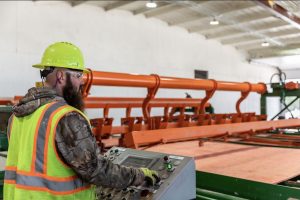
A Hoover Treated Wood Products employee in a high-visibility vest and hard hat operates a control panel at the lumber stacker on the production floor.

How Hoover’s Fire-Retardant-Treated Wood Treatment Process Works

At Hoover Treated Wood Products, we understand that building safe, durable structures requires materials that meet the highest standards. Since 1955, we’ve stood behind our commitment to Build By The Code. Live By The Code.  Our  Fire-Retardant-Treated Wood (FRTW) products complete a proprietary pressure-treatment process that enhances the natural properties of wood. It ensures maximum performance without sacrificing our commitment to sustainability.   Step #1: Receiving Raw Materials Hoover operates a nationwide network

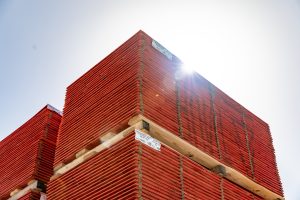
Fire-retardant-treated wood (FRTW) plywood stacks under a clear blue sky, highlighted by sunlight, ready for modern fire-safe construction projects.

The Legacy and Future of Fire-Retardant-Treated Wood 

Fire-retardant-treated wood (FRTW) now plays an indispensable role in modern construction, but that wasn’t always the case. Our new white paper, Fire-Retardant-Treated Wood: An American Innovation, traces the material’s fascinating journey from its early origins to its essential status in today’s fire-safe building practices.     Written by Dr. Dave Bueche,